
featured project
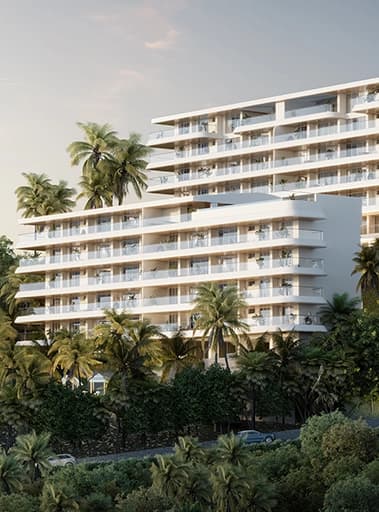 Raet View Details
REGISTER TO BECOME A CHANNEL PARTNER


Article
How A Tea Seller Went On To Start A Business With Rs 300 Cr+ Sales: The Story Of Dynamix Group
 SHARE
SHARE
Started in Mumbai in 1970 by KM Goenka, Dynamix is a prominent real estate business focused on the affordable luxury segment. It has developed and delivered over three crore square feet of real estate across Mumbai, Thane, and Goa.
The late KM Goenka’s entrepreneurial journey began in the early years of Independent India. As a young man running a tea stall and putting himself through school and college in Kolkata, Goenka was no stranger to hard work. When his tea stall was robbed and had to shut down, Goenka put his resourcefulness and intellect to use in other industries. He went from working at record stores, running operations at mining and textile companies, to starting Dynamix — a real estate business.
The seasoned entrepreneur, who moved to Mumbai, invested his savings to start Dynamix Group in 1970. His vision was to build homes for the burgeoning Indian middle class.
Dynamix has now grown into a prominent real estate business with a focus on the affordable luxury segment. It has developed and delivered over three crore square feet of real estate across Mumbai, Thane, and Goa.
In an interview with SMBStory, Jay Goenka — KM Goenka’s grandson and Director at The Dynamix Group — narrates the founder’s journey from the humble beginning to founding a large multi-crore business.
From A Tea Stall To A Real Estate Business
Jay says, “My grandfather used to sleep in his tea stall so he wouldn’t lose any time in conducting business. But, when the shop was robbed, he lost all his inventory. Starved of capital, he shut the tea stall and took up a job at a local record store.”
At the same time, KM Goenka was also putting himself through school and college and had gained admission to St Xavier’s College in Kolkata.
While working at the record store, one day, Goenka interacted with a patron who turned out to be the owner of a large mining company in the area. Impressed by Goenka’s intellect and eloquence, the patron hired Goenka to be his right-hand man and run his mining operations.
“My grandfather eventually left for Mumbai to look for new opportunities and began to run various textile mills. However, he was forced to close them as a result of their nationalisation in the 1970s by the government,” Jay says.
After working across this multitude of industries, Goenka finally settled on the real estate business and launched Dynamix in 1970.
A Family-Run Business
KM Goenka’s legacy still lives on in the family-run business. His son Vinod Kumar Goenka was instrumental in expanding Dynamix and making it a familiar name in the real estate industry.
Now, as a third-generation entrepreneur, Jay is actively involved in operations, approvals, planning, fund-raising, and business development.
He says, “We are currently developing four projects: Aldeia de Goa, which comprises apartments and villas on the beach; Parkwoods, a development comprising two 47-storey towers in Thane West; Divum, a 38-storey building in Mumbai’s western suburbs; and Avanya, a development which comprises four 38-storey buildings in Dahisar, Mumbai.”
He says Dynamix achieved sales worth Rs 300 crore across three projects in 2019. It also made transactions for land assets owned by the group, but these did not form part of its core business strategy and hence, are not included in the Rs 300 crore figure.
Dynamix has large land holdings across Mumbai, and these are concentrated in the western suburbs such as Goregaon, Malad, Kandivali, and Borivali. Its focus remains the development of its existing land holdings, which does not incur a significant cost when compared to land acquisition.
“We believe that local expertise in Mumbai will garner scale and profitability, and therefore, we remain committed to development in the Western Suburbs, which exhibit strong market depth and are not over-supplied. The development of projects with apartments priced between Rs 50 lakh and Rs 3 crore is the mainstay of our business,” Jay says. Initial challenges
Initial Challenges
Dynamix’s expertise in the housing segment stems from the hardships faced and lessons learned during the early years.
The company’s first large project was the development of the township of Gokuldham in Goregaon East, Mumbai. Part of the development project included a government requirement of delivering 1,000 homes to the Rashtriya Mill Mazdoor Sangh (RMMS) — a union of textile mill workers.
Dynamix was supposed to provide these 1,000 homes to the RMMS members at Rs 87 per square foot. As part of the arrangement, steel and cement were to be provided by the Maharashtra government at controlled rates.
However, due to shortages of raw material, the state government was unable to provide the essential commodities required at the promised prices, leading to massive cost escalations. The project ran into severe losses.
“The group set up a small cement plant on-site and manufactured its own cement, which was then used in constructing the buildings, thereby reducing cost (and therefore losses) in the process. My grandfather also decided to sell some parts of his land to rival developers to raise the necessary capital needed to fund his losses,” Jay says.
Source By : yourstory.com
- AuthorDynamix Group
- Date12 Nov, 2020
- Share


LATEST BLOGS


Contact Us
We’re happy to help you, just write us an email or call us.